
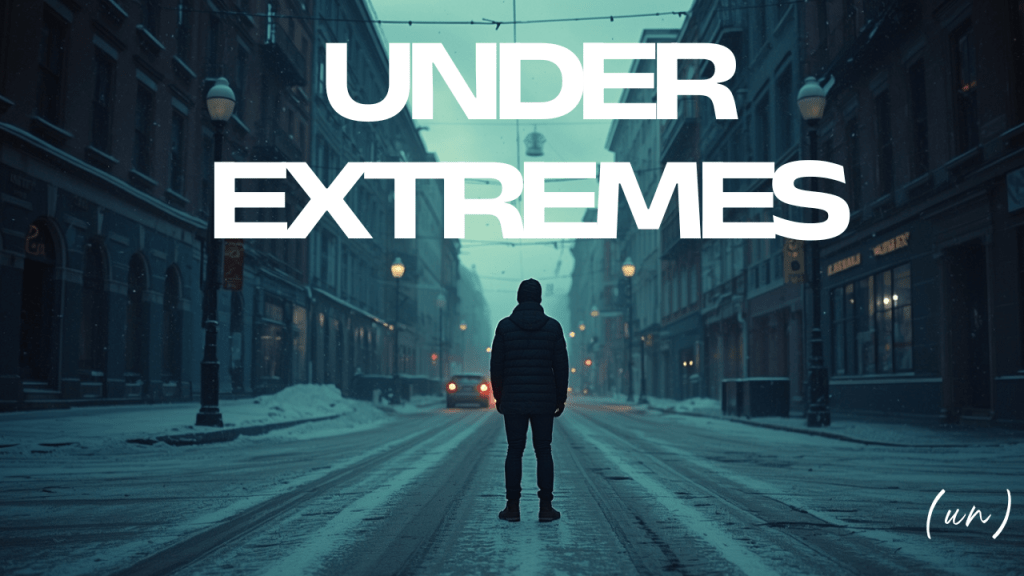
In many parts of the world, extreme weather is not an occasional inconvenience. It is a recurring condition that slowly reshapes daily life. Long winters, heavy snow, prolonged heatwaves, and periods of environmental isolation do more than disrupt transportation or routines. They influence how people think, feel, and relate to themselves.
These effects are rarely dramatic. They do not always arrive as crises. More often, they unfold quietly, through subtle changes in mood, attention, motivation, and perception.
When the World Becomes Smaller
In regions affected by long winters, snowstorms and low temperatures can reduce life to a limited physical space. Streets become obstacles. Outdoor movement decreases. Social encounters turn into digital exchanges. Days begin to resemble one another.
Gradually, the world feels smaller.
Life shifts indoors, not by choice, but by necessity. The horizon disappears. Natural light becomes scarce. Silence becomes more present. What was once a dynamic environment turns into a repetitive setting.
This physical contraction often leads to a psychological one. When external stimulation decreases, internal processes become more noticeable. Thoughts circulate more freely. Emotions linger longer. Time seems to slow.
The Psychological Cost of Repetition
At first, reduced activity can feel like rest. A pause from constant movement. A temporary relief from pressure.
Over time, however, repetition begins to wear down mental energy.
Concentration declines. Motivation fluctuates. Days blend together. Tasks that once felt simple require more effort. This is not necessarily depression or burnout. It is often a form of silent mental erosion, caused by lack of variation and prolonged predictability.
Human cognition evolved in environments of constant change. When change disappears, the mind struggles to remain alert and engaged.
Silence and Self-Confrontation
Extreme weather often brings extended periods of quiet. Traffic diminishes. Public spaces empty. Daily noise fades.
With fewer external interruptions, attention turns inward.
For many people, this is an unfamiliar experience. Modern life usually offers endless distractions. When these disappear, unresolved thoughts, memories, and concerns become more noticeable.
Some individuals find this reflective space calming. Others find it uncomfortable. Extended isolation frequently reveals how dependent people are on external stimulation to regulate emotions.
Heat, Fatigue, and Mental Strain
Cold is not the only climate that affects psychological balance. Prolonged heat produces similar disruptions through different mechanisms.
Heatwaves interfere with sleep, increase physical fatigue, and keep the body in a state of constant alert. Cognitive performance declines. Patience decreases. Emotional responses become more volatile.
When recovery becomes difficult, mental resilience weakens.
Discomfort changes form, but its impact remains.
The Illusion of Control
Modern societies emphasize planning, optimization, and efficiency. Schedules, routines, and productivity systems create a sense of control over time and outcomes.
Extreme weather regularly challenges this belief.
Snow closes roads. Drought restricts resources. Storms disrupt infrastructure. Heat alters behavior. Carefully constructed systems are temporarily suspended.
These moments reveal that control is always conditional. Environmental forces remain beyond full management.
What Hostile Climates Reveal
The most significant impact of extreme weather is rarely physical. It is psychological and emotional.
Periods of environmental restriction show how individuals respond when momentum slows. When growth pauses. When life becomes concentrated rather than expansive.
They reveal habits of thought, emotional dependencies, and coping mechanisms that often remain hidden in more dynamic conditions.
Isolation does not create these patterns. It exposes them.
Adaptation as a Human Constant
Human history is defined less by comfort and more by adaptation.
Communities in cold regions developed systems for heat preservation. Desert societies learned water conservation. Coastal cities built flood defenses. Families learned to function in prolonged confinement.
Alongside physical adaptation, psychological adaptation emerged.
People learn to reorganize priorities. To tolerate uncertainty. To extract meaning from smaller routines. To preserve stability in unstable conditions.
Resilience is rarely dramatic. It is built slowly, through repeated adjustment.
Quiet Transformation
Climate conditions change. Seasons shift. Environmental pressures rise and fall.
And gradually, people change with them.
These transformations are rarely noticed in real time. They become visible only in retrospect, after long winters, extreme summers, or extended periods of isolation.
Few individuals pass through such experiences unchanged.
An Open Question
Extreme environments inevitably shape human psychology. This process cannot be avoided.
The more important question is not whether transformation will occur, but what form it will take.
Will difficult conditions lead to greater patience, self-awareness, and emotional resilience? Or will they reinforce withdrawal, frustration, and mental fatigue?
The answer depends less on the climate itself and more on how individuals learn to respond to it.
Understanding this relationship is not only relevant in times of crisis. It is essential for navigating an increasingly unstable world.
 Unveil Neuroscience
Leave a comment