
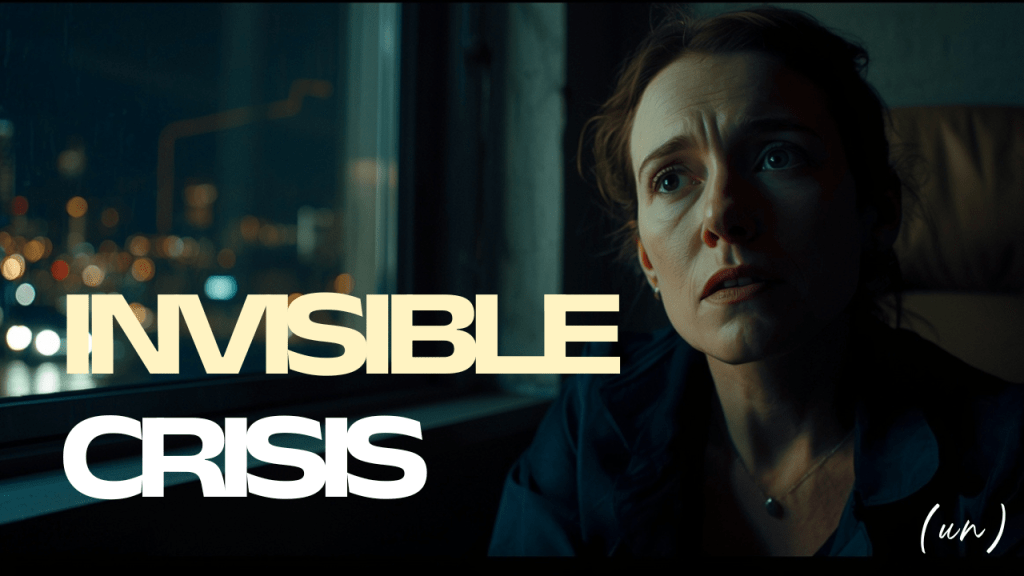
Most people imagine a midlife crisis as something loud and dramatic.
A breakdown. A sudden career change. A reckless decision.
But for many intelligent, responsible adults, it looks nothing like that.
It looks like stability. Routine. Comfort.
And a quiet sense of emptiness.
This is the invisible midlife crisis — a psychological shift that affects people who did everything right, built solid lives, and still ended up feeling lost.
When Success Stops Feeling Like Success
From the outside, everything seems fine.
You studied. You worked. You avoided unnecessary risks. You followed the rules.
You built security, respect, and consistency.
Yet somewhere in your thirties or forties, something begins to change.
Not in your résumé. Not in your income. Not in your social status.
In your motivation.
Life keeps working. You stop feeling alive inside it.
The Brain Was Never Designed for Pure Stability
Human psychology evolved for movement, challenge, and adaptation.
Our nervous system expects growth. It expects uncertainty. It expects new problems to solve.
When life becomes too predictable, the brain begins to conserve energy.
Motivation fades. Curiosity weakens. Ambition feels heavy.
Not because you are lazy. Not because you failed.
Because your system no longer recognizes progress in your current path.
The Identity Expiration Effect
What many people call a “midlife crisis” is often an identity crisis in slow motion.
It happens when the version of yourself that once made sense no longer fits the life you are living.
Your career may still be respectable. Your routine may still be functional. Your lifestyle may still be comfortable.
But internally, it feels outdated.
You are running old software in a new phase of life.
Why Comfort Starts Feeling Claustrophobic
At first, comfort feels like success.
Later, it can feel like confinement.
That is why:
- Achievement stops satisfying.
- Stability feels restrictive.
- Distraction becomes more attractive than reflection.
Silence becomes uncomfortable because it forces honesty.
It reveals that you want more from yourself.
Not more money. Not more recognition.
More meaning. More challenge. More alignment.
You Are Not Lost: You Are Outgrowing Your Life
Feeling lost does not mean you are failing.
It often means you have evolved beyond the life you once designed.
Your values changed. Your priorities shifted. Your internal standards matured.
But your external life remained the same.
That gap creates emotional friction.
How Rebuilding Actually Begins
Rebuilding does not start with quitting everything.
It starts with awareness.
With noticing when you are operating on autopilot. With questioning inherited routines. With examining habits that no longer serve you.
Autopilot is not neutral. It is slow erosion.
Change begins when you choose to participate in your own life again.
Practical Reflection Questions
Consider asking yourself:
- What parts of my life feel outdated?
- Where am I operating on habit instead of intention?
- What challenges am I avoiding?
- What would growth look like now, not ten years ago?
Honest answers create direction.
The Quiet Opportunity Hidden in This Crisis
The invisible midlife crisis is uncomfortable.
But it is also a signal.
It means you are still aware. Still questioning. Still capable of growth.
Many people never reach this stage. They simply numb themselves and drift.
Awareness is an advantage.
Conclusion
You are not broken. You are not weak. You are not ungrateful.
You are responding normally to a life that no longer challenges who you have become.
The invisible midlife crisis is not the end of meaning.
It is the beginning of redesign.

 Unveil Neuroscience
Leave a comment