Category: Neuroscience
-

Your Brain Was Not Built for This World
There is nothing wrong with you. If you feel constantly tense.If you feel overstimulated.If your nervous system never fully powers down.If you wake up tired even after sleeping. The problem might not be your discipline. It might be your environment. Because your brain was not built for this world. A 200,000-Year-Old Brain in a 21st-Century…
-
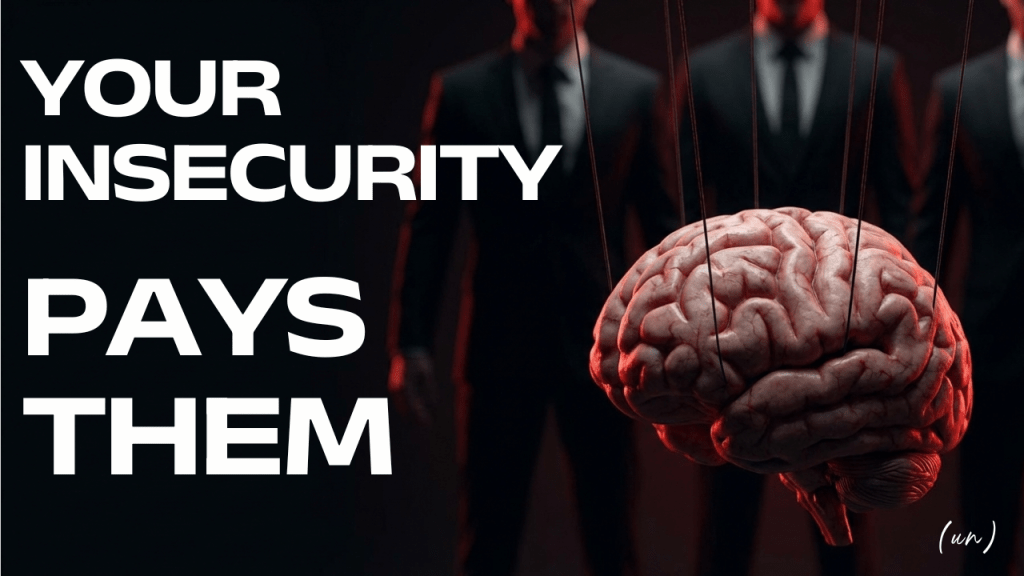
The Self-Help Industry Needs You Insecure
If you truly felt enough, a large part of the self-help industry would shrink overnight. That’s not an insult.It’s a structural observation. Modern self-improvement does not operate purely on transformation. It operates on insufficiency. Not necessarily in malicious ways. But systematically. The model is simple: Identify a flaw.Amplify the flaw.Offer a solution.Introduce a new flaw.…
-

Self-Improvement Is Making You Miserable
There was a time when self-improvement felt like growth. It meant learning something new, building discipline, expanding your capacity. It felt empowering. Today, for many people, it feels like pressure. You wake up already behind — behind on habits, on goals, on the version of yourself you’re supposed to become. Improvement is no longer optional.…
-
Why Small Problems Hijack Your Entire Day (The Neuroscience Behind Emotional Overreaction)
A small delay.A careless comment.A minor inconvenience. And suddenly, your entire day feels off. If you’ve ever wondered why tiny problems seem to drain more energy than serious ones, you’re not weak, dramatic, or overreacting.You’re experiencing a predictable neurological response. This article explores the neuroscience behind why small problems feel so overwhelming — and how…
-

Why Dogs Are Happier Than Humans
How Simplicity, Safety, and the Nervous System Shape Emotional Well-Being There is something unmistakable about the way dogs move through life. They wake up curious. They greet the world with their whole body. They rest without guilt. They play without embarrassment. Even in ordinary moments, they seem light, present, and emotionally available. Meanwhile, most humans…
-

Why Strong Men Think Better
The Connection Between Physical Strength and Mental Clarity Modern culture often treats physical strength and intellectual depth as separate worlds. One is associated with discipline, effort, and endurance. The other with reflection, analysis, and emotional intelligence. But the human nervous system was never designed to divide these dimensions. From an evolutionary and psychological perspective, strength…
-

Why Smart People Secretly Feel Like Frauds
At some point in life, many intelligent, competent, and experienced people begin to feel like they are pretending. They have results.They have recognition.They have proof that they are capable. And yet, inside, a quiet voice keeps whispering: “What if they find out I’m not really that good?”“What if I don’t deserve to be here?”“What if…
-
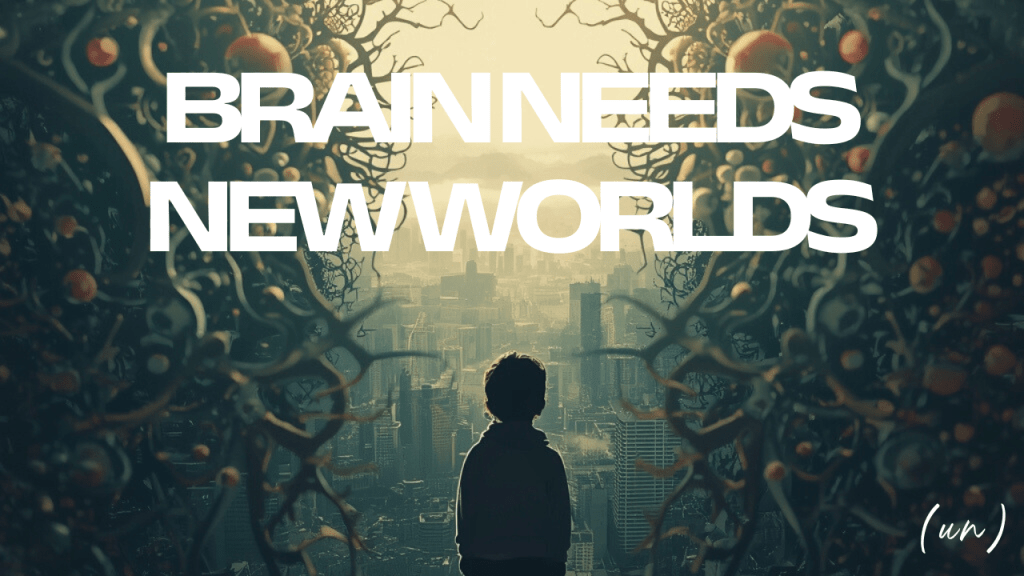
Brain Needs New Worlds
The brain is not designed to grow in comfort.It grows in moments when prediction fails and certainty dissolves. Most of what we call learning is simply repetition refined over time. But growth — real growth — begins when the mind realizes that its internal map no longer matches the territory it’s walking through. That realization…
-

Hair Loss Isn’t Vanity — It’s the Brain Losing Control
Hair loss rarely arrives as a dramatic event.It begins quietly, almost politely — a few strands, a subtle change, something easy to dismiss. But the brain doesn’t dismiss it.It registers it. Not as a cosmetic shift, but as a signal that something fundamental has changed: the body is no longer waiting for approval. What unsettles…
-
Biology Does Not Negotiate With Ideology
The silent consequences of ignoring biological reality There is a comforting idea in modern culture:that the body can be trained to follow belief. That with enough conviction, discipline, or moral clarity, biology will adapt ; quietly, obediently — to whatever framework we choose. But biology doesn’t work that way. It never has. Biology doesn’t argue.…
 Unveil Neuroscience