
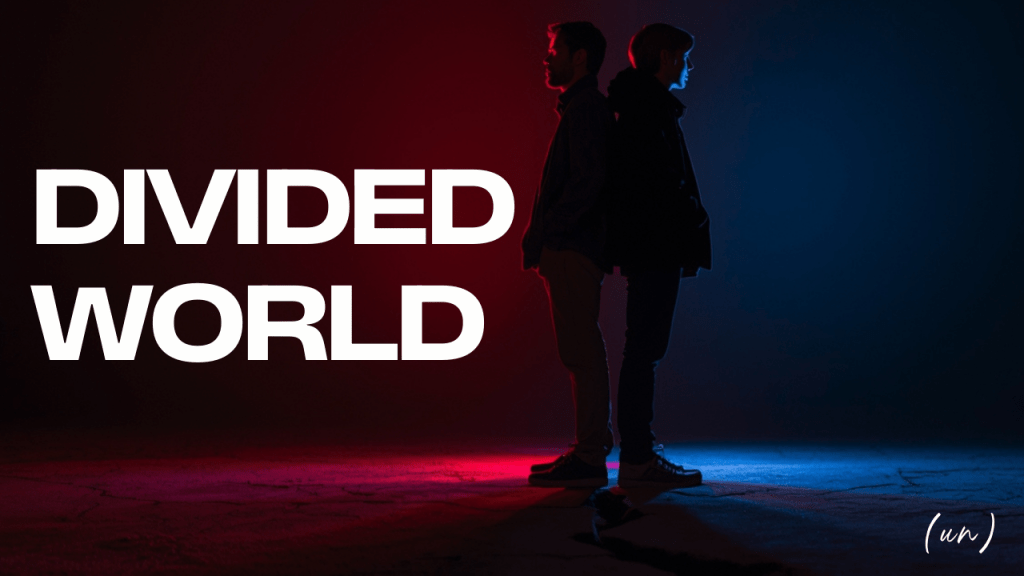
The Psychology Behind a Divided Society
Most people believe that polarization is mainly about politics, ideology, or leadership. We are told that division exists because people think differently, vote differently, or consume different information.
But beneath the surface, something deeper is happening.
What we are witnessing is not only a political crisis. It is a psychological one.
Modern societies are experiencing a large-scale shift in how human nervous systems respond to uncertainty, disagreement, and perceived threat. This shift is quietly reshaping how people think, feel, and relate to one another.
How Fear Changes the Brain
When the human brain perceives danger, whether real or symbolic, it reorganizes its priorities.
Curiosity becomes secondary. Complexity feels unsafe. Certainty becomes essential.
This happens because the amygdala, the brain’s threat-detection system, becomes more active under stress. When this system is dominant, emotional signals override rational evaluation. Survival mechanisms begin to guide perception.
In this state, people do not ask:
“Is this true?”
They ask:
“Is this safe?” “Is this ours?” “Does this protect my identity?”
Once fear becomes the organizing principle of thought, polarization begins.
How Digital Environments Amplify Division
Social media and digital platforms intensify this process.
Algorithms reward content that provokes strong emotional reactions. Outrage, fear, and certainty spread faster than nuance, doubt, or reflection. Posts that simplify reality into clear villains and heroes receive more attention than those that explore complexity.
Over time, millions of users are trained to remain in a constant low-grade state of alert.
They learn to scan conversations for threats. They learn to interpret disagreement as hostility. They learn to associate identity with ideology.
This training does not happen consciously. It happens through repetition.
When Disagreement Becomes Personal
In healthy societies, disagreement is normal. People can hold different views without feeling emotionally attacked.
In polarized societies, this changes.
Disagreement begins to feel personal. It feels like rejection. It feels like danger. It feels like moral failure.
As this pattern deepens, people stop seeing each other as complex individuals. They begin seeing labels, symbols, and stereotypes.
Nuance disappears. Curiosity fades. Listening becomes rare.
Reality is compressed into emotionally satisfying narratives that are easy to defend and difficult to question.
Why Certainty Feels So Comforting
Certainty plays a powerful psychological role.
When the world feels unstable, clear explanations provide emotional relief. Simple stories calm anxiety. Strong opinions reduce doubt.
From the brain’s perspective, certainty feels like safety.
But this comfort has a cost.
A mind that cannot tolerate uncertainty slowly loses its capacity for learning, empathy, and adaptation. It becomes rigid. Defensive. Reactive.
A polarized nervous system does not feel free, even when it believes it is protecting important values.
It is constantly preparing for conflict.
How Polarization Reshapes Identity
Over time, beliefs stop being opinions. They become emotional anchors.
People begin to experience their views as extensions of themselves. Questioning an idea feels like questioning their worth. Doubt feels like weakness. Empathy feels like betrayal.
At this stage, identity becomes fused with ideology.
This fusion makes dialogue almost impossible.
Because changing one’s mind now feels like losing oneself.
Why Facts Alone Cannot Fix Division
Many assume that polarization can be solved with better information. More data. More evidence. More arguments.
But the problem is not primarily intellectual. It is emotional and neurological.
When the nervous system is in threat mode, facts are filtered through fear. Information that supports identity is accepted. Information that challenges it is rejected.
No amount of logic can override a system that feels unsafe.
Rebuilding Tolerance for Complexity
Reducing polarization requires more than political reform. It requires psychological resilience.
Societies must relearn how to:
• Tolerate ambiguity • Reward reflection • Value listening • Normalize uncertainty • Slow emotional reactions
This begins at the individual level.
It starts with noticing when fear shapes perception. It starts with questioning emotional certainty. It starts with learning how to remain open under pressure.
A Psychological Crisis, Not Just a Political One
Polarization is not simply a disagreement of ideas.
It is a large-scale breakdown in emotional regulation.
It is what happens when millions of nervous systems are trained to react instead of reflect.
Until societies learn how to calm these systems, cycles of division will continue under new names, new ideologies, and new conflicts.
Understanding this is not a solution.
But it is a beginning.
UNVEIL explores the psychology, neuroscience, and emotional patterns that shape modern life.
Our work focuses on helping people understand themselves, society, and the invisible forces that influence human behavior.
If this article resonated with you, explore more at UNVEIL and continue the journey of awareness.


Leave a comment